Systematic 0DTE Options Trading
Defined-risk options strategies on SPX and index products, driven by dealer positioning and regime. These systems carry strong Calmar and Sortino ratios across forward testing and live management.
Algorithmic Trading · Real-Time Financial-AI Systems
Real-time 0DTE SPX options-microstructure infrastructure, with a self-hosted AI layer that reasons over live market structure. Built and operated for research purposes only. Nothing here is investment advice, a recommendation, or a solicitation.
Some methodologies
Defined-risk options strategies on SPX and index products, driven by dealer positioning and regime. These systems carry strong Calmar and Sortino ratios across forward testing and live management.
Tick-level ingestion and per-minute aggregation of gamma / delta / vega exposure, charm, skew, max-pain and net-premium drift across the full 0DTE SPX chain, VIX and 250+ concurrent instruments.
Local LLM agents that learn the way I trade — from my notes, daily write-ups and past sessions — through a pgvector memory layer, pre-warmed with dense structural summaries instead of raw ticks.
A strategy registry with walk-forward validation and prop-firm drawdown/survival modeling, with reproducible result caching for honest, comparable evaluation.
What I'm currently building
Today I rotate one-shot calls across commercial APIs — Claude (the most capable), plus Gemini, Mistral and others — feeding each a tightly compressed market summary, because tick-level data won't fit and the plan caps run out mid-week. Moving to a self-hosted model removes the cap and lets me benchmark what actually matters for trading:
Time-to-first-token and generation latency low enough to fit inside scalping execution windows.
Sustained, minute-by-minute context injection through the session without thermal or VRAM bottlenecks.
Rapidly experimenting to learn which real-time signals carry edge — and which are noise — across high volumes of structured market data.
Decision speed fast enough for the model to react inside scalping windows — quicker than manual execution of the same methodology.
The longer-term goal is a refined local model with durable long-term memory — warmed from summary profiles and continuously taught my methodology — running at high throughput on dedicated hardware.
Selected work
A real-time SPX options analytics and automated-reporting platform: per-minute dealer-exposure snapshots, filtered net-premium drift, regime detection, and gated end-of-day / pre-open / intraday report generation — surfaced through a React charting portal, with verification gates on every published figure.
Multi-agent orchestration over a knowledge base of thousands of embedded research chunks with structured tool use. It learns from my daily write-ups and past sessions via pgvector — and is being moved off API caps onto self-hosted hardware at near-zero marginal cost per token.
Backtesting, a strategy registry and signal research (dealer-positioning, regime and ML families) with prop-firm survival simulation and reproducible, cached result sets for comparable evaluation.
Earlier career · 2001–2015
Two generations of WebTrust-certified public-key infrastructure — multi-layer CAs, registration authorities, LDAP, and OCSP — deployed to government, banking, and industrial clients across 30+ countries. HSM-integrated custom cryptography, smart-card platforms, and a granted patent for digital authentication of valuable goods. Secure data centres built to WebTrust and DoD Level 5 specifications; annual WebTrust audit programmes; EU EEMA PKI interoperability standards work.
Earlier career · 2001–2015
Secure credential and password-management platforms across web, desktop, and mobile — X.509 digital IDs, encrypted local stores, and biometric integration. Consumer social-network systems for major sports franchises with Facebook/Twitter APIs, content management, and fan push alerts. Smart-card authentication architectures; commercial certificate and subscription transaction portals. Cryptocurrency and blockchain identity infrastructure for digital-asset provenance and secure transactions.
Daily intelligence
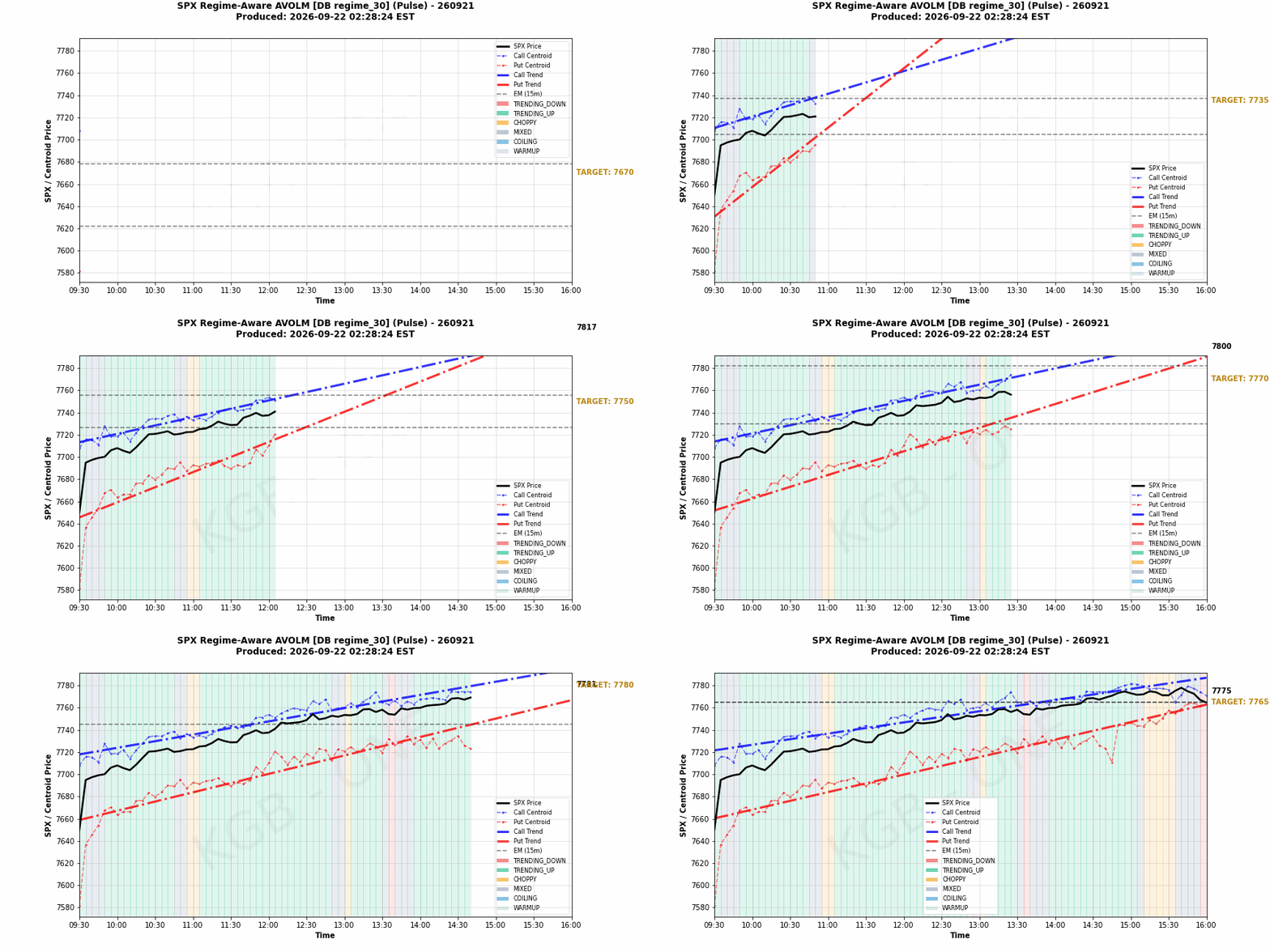
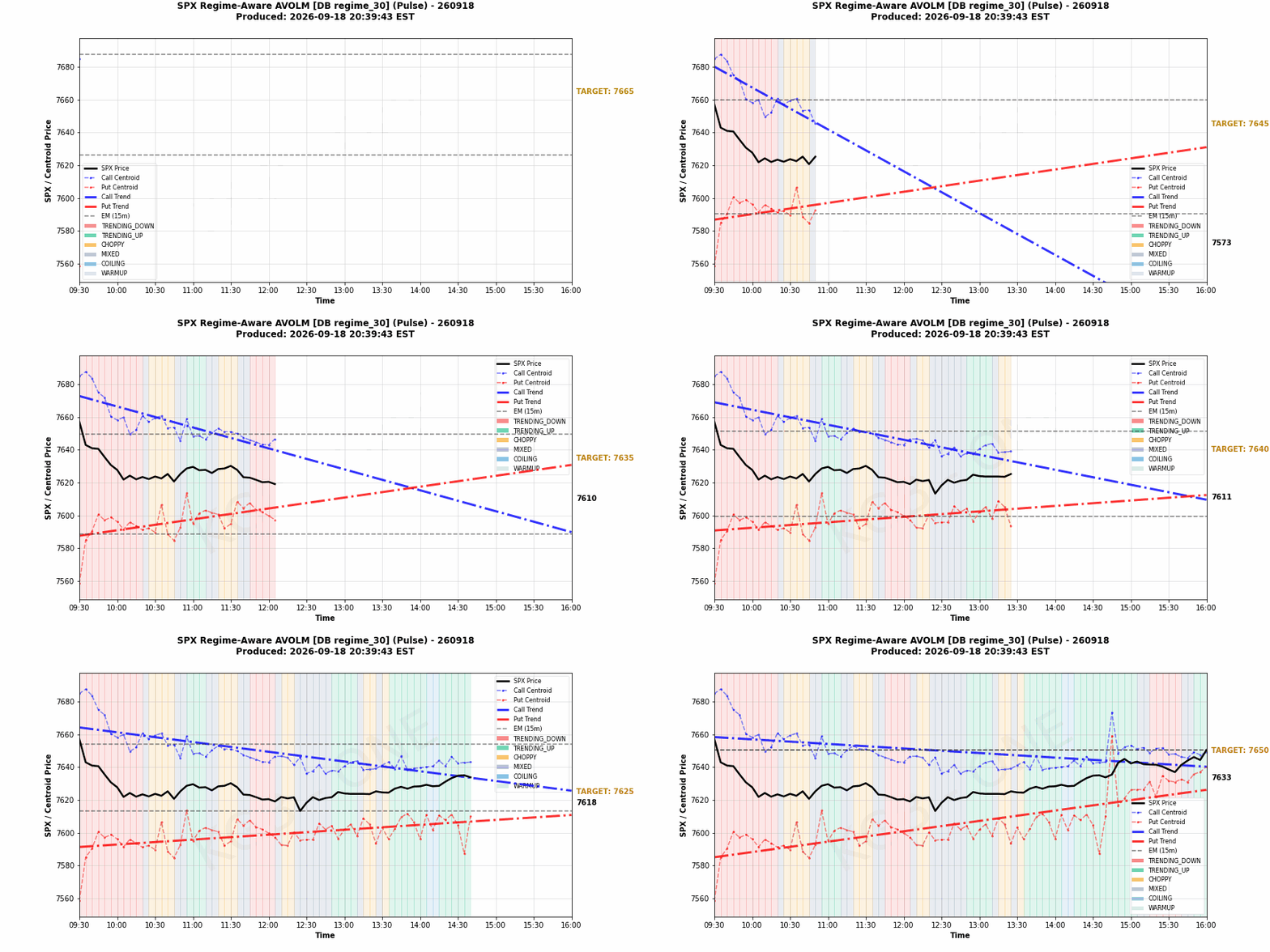
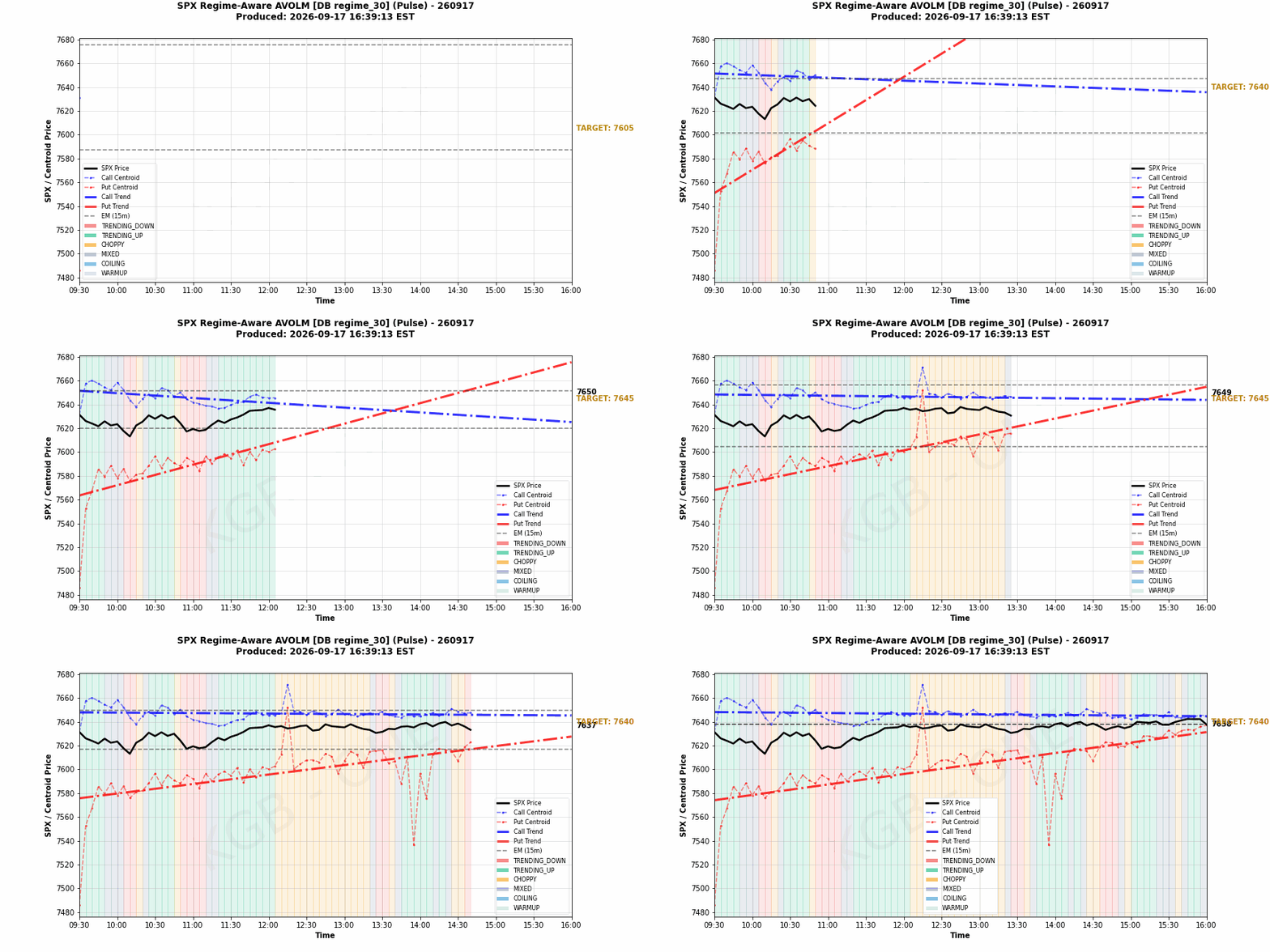
Every session my stack generates an end-of-day market report — dealer-positioning, regime, flow and the levels that matter — fronted by $RAVOLM, a regime-aware animated volume visualisation. A few recent ones:
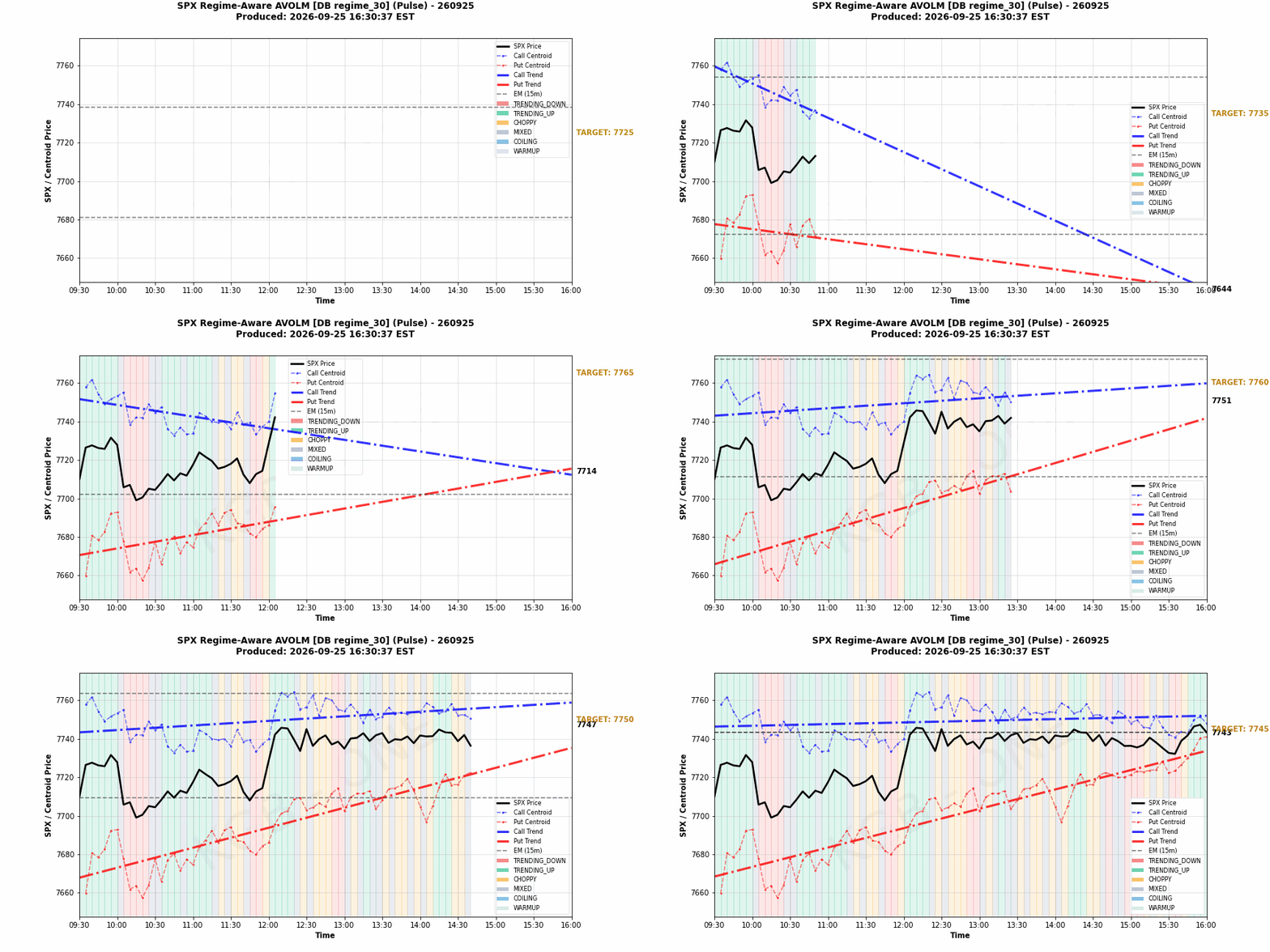
2026-09-25 · Friday
SPX +0.51% | open 7,710, low 7,693 at 10:15, then a 30pt jump from 11:55 to 12:06 on positive US-Iran talk headlines, a late rally from 7,733 (3:36) to 7,752 (3:51), close 7,743.41
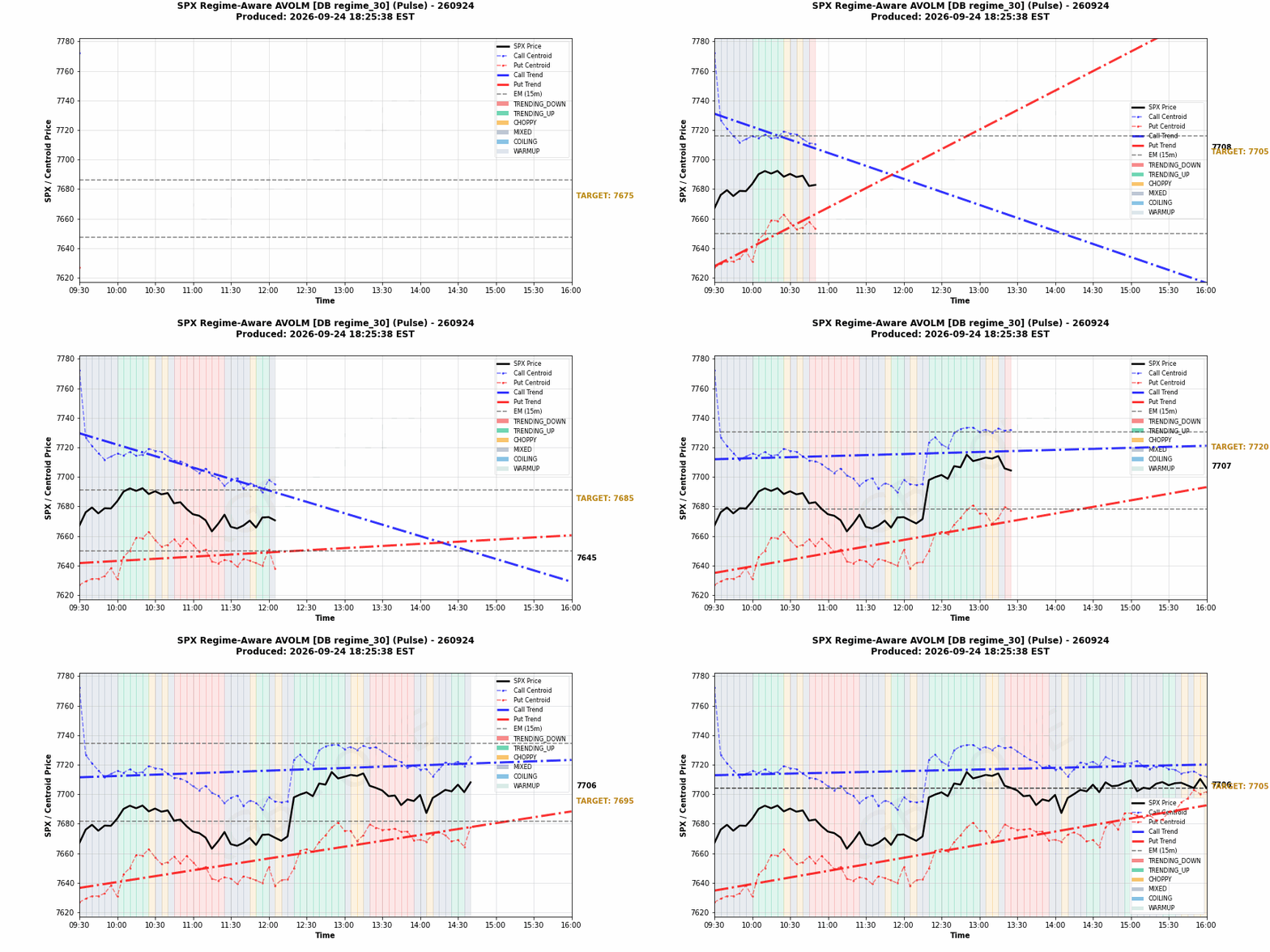
2026-09-24 · Thursday
SPX -0.02% | open 7,666.99 was a 39pt gap down, low 7,662.57 at 11:14, then a midday rally on reports of a deal to reopen the Strait of Hormuz reached 7,719 by 12:57, close 7,704.13
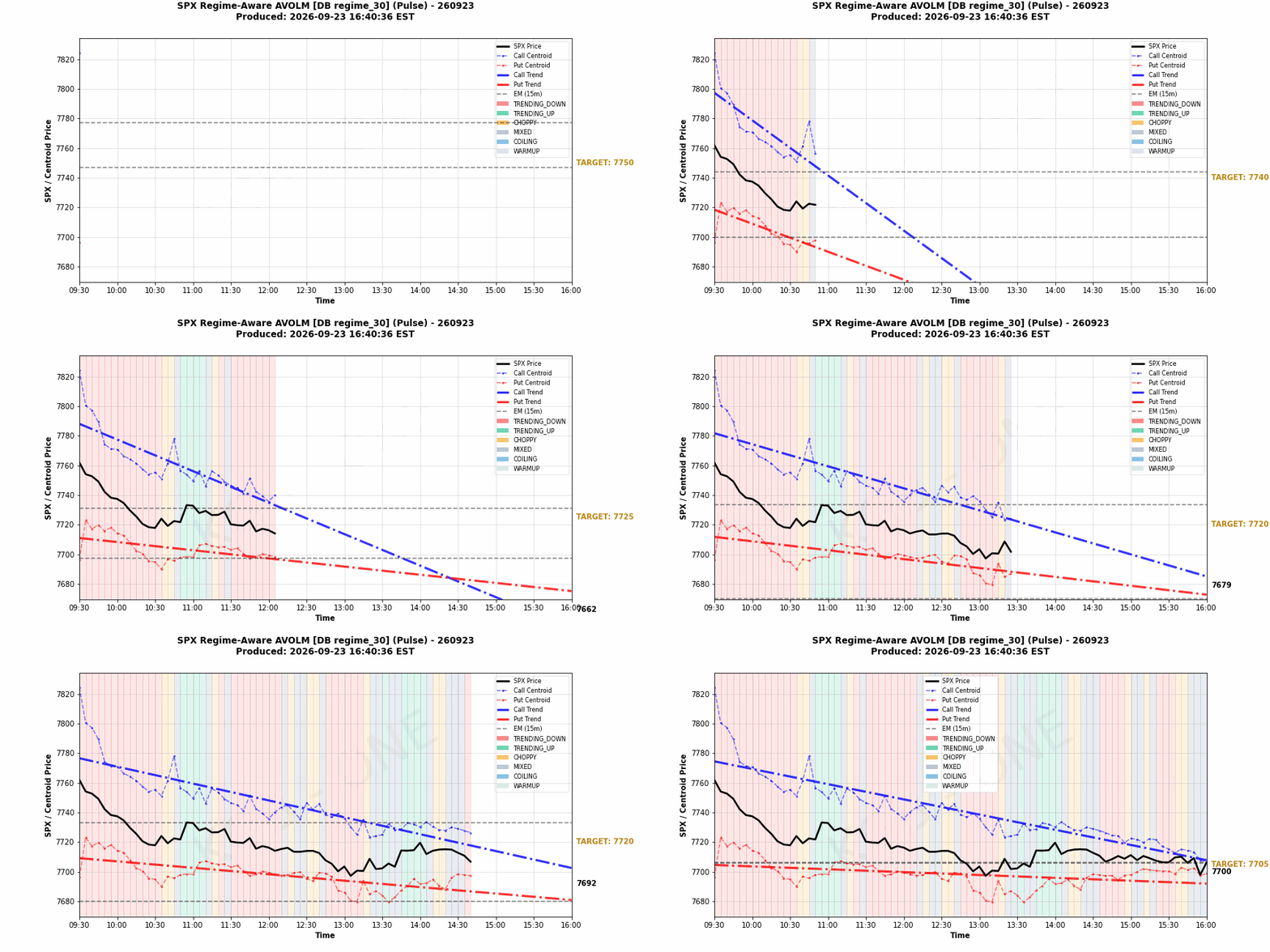
2026-09-23 · Wednesday
SPX -0.75% | open/high 7,761.94, low 7,694.89 (13:04), close 7,706.03 - a trend day down with a late bounce off the low
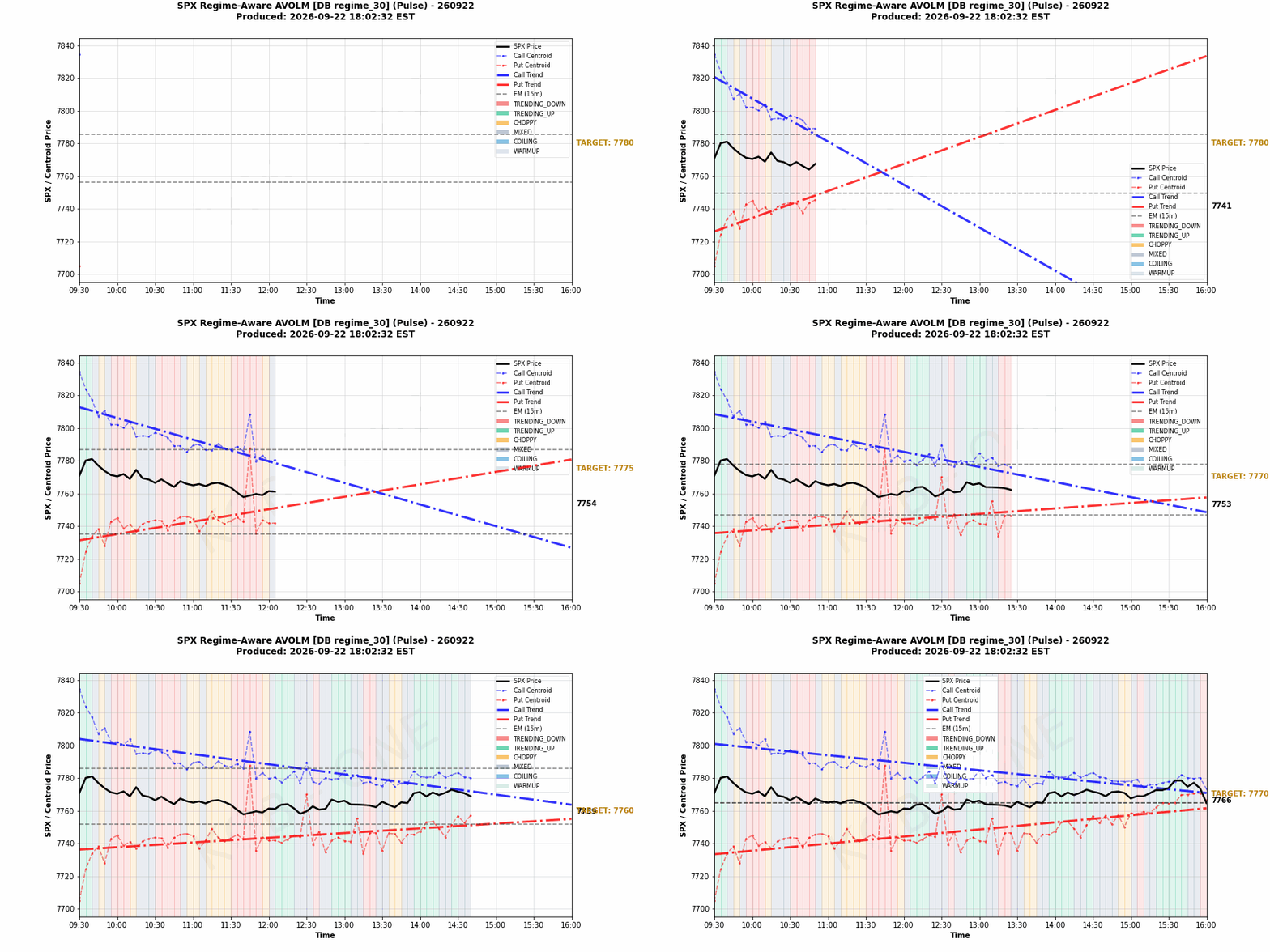
2026-09-22 · Tuesday
SPX -0.00% | open 7,770.81, high 7,782.19, low 7,756.26, close 7,764.64 - a 26pt range that closed a hair off unchanged
2026-09-21 · Monday
SPX +1.49% | open 7,692.83 was a 42pt gap, the tape never traded back below it, and net DEX built one-way all session behind a call wall 45pt above the close
2026-09-18 · Friday
SPX +0.17% | open 7,657.17 was the high, a one-minute gamma/delta exhaustion flicker marked the 7,610.52 low, and a $5.5B sell MOC imbalance didn't stop the recovery
2026-09-17 · Thursday
SPX +1.14% to 7,637.76
$RAVOLM (Regime-Aware Animated VOLM) — research/visualisation, not financial advice.
Curriculum vitae
CISO and CTO background with 20+ years in regulated financial services and digital security — alongside full-stack systems development at the intersection of quantitative trading and applied AI. Designs, builds and operates systems such as real-time 0DTE SPX options analytics, dealer-exposure and regime engines, and a multi-agent AI / reporting layer with pgvector memory. These trading systems carry strong Calmar and Sortino ratios across forward testing and live management — with work now underway toward self-hosted LLM inference to apply local models to trading methodology at high throughput.